
News
From Plastic to Compostable: How EU Packaging Regulation Creates New Opportunities for Sustainable Bags
The European Union’s Packaging and Packaging Waste Regulation (PPWR) is fundamentally reshaping the packaging landscape. While the regulation prioritises recyclability and sets ambitious recycled-content targets for conventional plastics, it simultaneously opens clear and valuable opportunities for compostable bags — especially for B2B buyers seeking compliant, future-proof packaging solutions.
Under the PPWR, which has been applicable since 12 August 2026, most packaging must be designed for material recycling. However, the regulation explicitly recognises that certain applications are better suited to compostability. From 12 February 2028, permeable tea and coffee bags, soft single-serve beverage units, and sticky labels on fruit and vegetables must meet industrial composting standards (with possible additional home-composting requirements set by Member States). Crucially, Member States retain the flexibility to mandate compostability for other formats — including lightweight and very lightweight plastic carrier bags — where appropriate biowaste collection and treatment infrastructure exists.
This creates a strategic window for compostable bags. Unlike conventional plastic packaging, certified compostable plastics are exempt from the mandatory post-consumer recycled content targets that take effect from 2030 (35 % for most other plastic packaging, with higher rates in later years). For applications that frequently become contaminated with food or organic waste — such as produce bags, bin liners, or food-service packaging — compostable solutions prevent contamination of recycling streams and support the circular management of biowaste.
For B2B buyers, the shift from traditional plastic to compostable bags offers several advantages. First, it reduces regulatory risk in markets where Member States expand compostability requirements. Second, it aligns with growing retailer and consumer demand for packaging that can be disposed of together with organic waste. Third, properly certified compostable bags (meeting EN 13432 or updated harmonised standards) provide clear documentation — including Declarations of Conformity and material composition labelling — that simplifies compliance under the PPWR’s substance restrictions, identification, and future harmonised labelling rules.
Successful market entry, however, depends on quality and transparency. Buyers should prioritise suppliers who can demonstrate:
Full industrial compostability certification
PFAS-free and heavy-metal-compliant formulations
Consistent technical performance (strength, sealability, printability)
Traceable biobased or compostable feedstock
Complete technical documentation ready for EU market placement
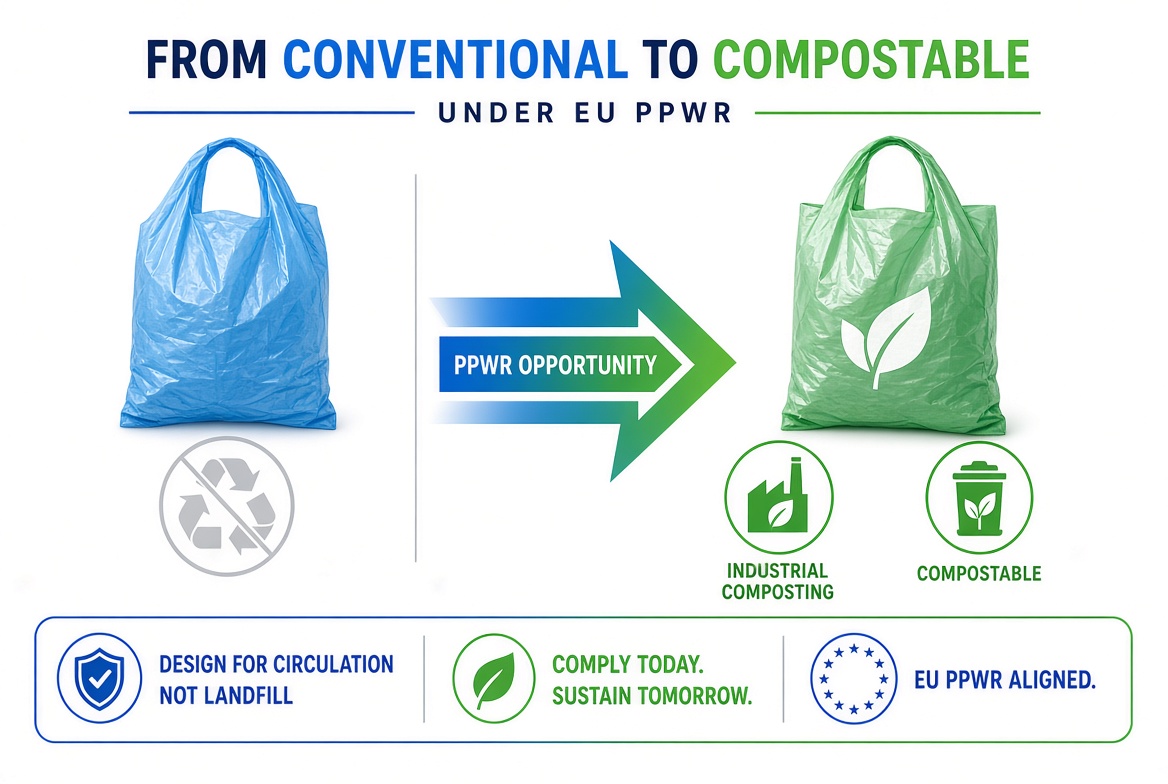
As the 2028 deadlines approach and more Member States explore expanded compostability mandates, demand for reliable, certified compostable bags is expected to rise steadily. Brands and importers that begin transitioning key SKUs now will be better positioned to meet evolving requirements, avoid supply disruption, and strengthen their sustainability credentials.
In short, the PPWR does not eliminate plastic packaging — it redirects it. For applications where recycling is impractical or undesirable, compostable bags represent one of the most practical and regulation-aligned alternatives available today. Manufacturers who combine technical expertise, robust certification, and transparent compliance support are becoming essential partners for B2B buyers navigating this new regulatory environment.
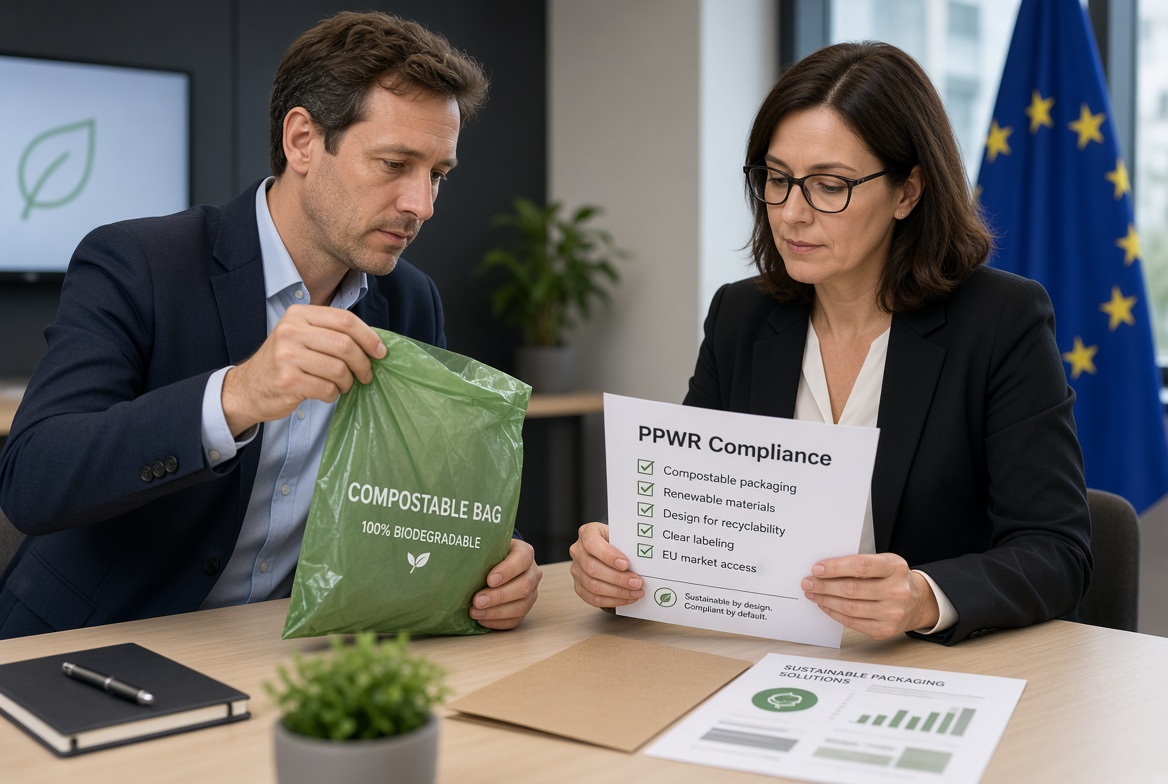
By moving early from conventional plastic to high-quality compostable alternatives, companies can turn regulatory change into a competitive advantage — delivering packaging that is not only compliant, but genuinely aligned with the EU’s circular economy goals.


 Send Email
 Derrick
 WhatsApp